
Climate Concerns Intensify Nationally, But Recovery and Resiliency Vary by Region

Impacts from severe climate events are affecting utilities in all the regions of our country. While the geographical impacts vary from fire to snow, hurricanes and tornadoes, the threats remain the same in the form of outages, damaged infrastructure and widespread disruption. For this reason, large investments are required, but a one-size-fits-all approach to resiliency doesn鈥檛 work due to the regional diversity of threats.
Energy utilities from regions where lower risks were reported aren鈥檛 necessarily better prepared for those risks; they just have alternative threats to consider. With climate modeling data growing in accuracy, the storm readiness and response teams of energy utilities can be a lot more strategic and effective in their tailored approach to the specific region.
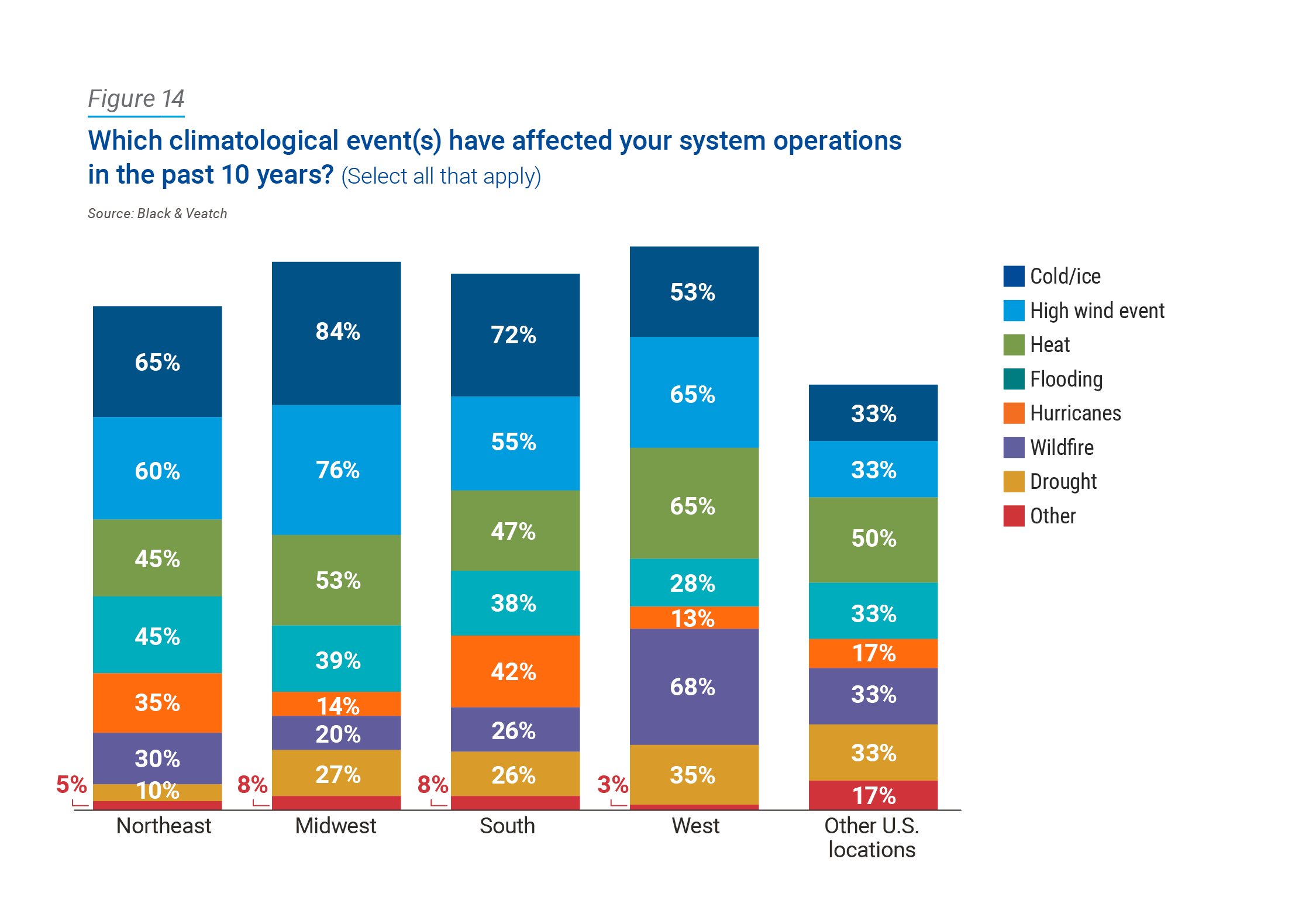
According to responses from nearly 700 U.S. electric sector stakeholders for 日韩福利 在线 & Veatch鈥檚 2024 Electric Report, cold/ice (66 percent), high wind (62 percent) and heat (49 percent) are the most common threats to system operations, and these concerns vary significantly by region. For example, wildfire is the biggest concern in the West (68 percent) while it鈥檚 a lesser concern in the Midwest (20 percent) (Figure 14).
Despite these obstacles, recovery times are being optimized, and those surveyed reported that their specific utility鈥檚 recovery time has improved from previous years 鈥� with 48 percent saying it鈥檚 taking less time to recover from severe weather events (and just 13 percent saying it鈥檚 taking more time).
This may be attributed to utilities developing more robust response plans, mutual assistance programs, system automation and improved infrastructure. Utilities also are implementing ways to isolate and address issues before the entire system is affected. Additionally, we鈥檙e seeing the positive effects of resiliency investments in grid infrastructure a few years after the U.S. government鈥檚 Infrastructure Investment and Grid Resiliency and Innovation Partnerships (GRIP) Program was established.
Disaster Planning Gains Momentum
Most utilities reported they are prioritizing disaster planning, regardless of regulatory requirements. Thirty-seven percent of respondents say they are motivated by regulatory requirements, while 41 percent said they would be developing disaster plans even if it wasn鈥檛 regulated.
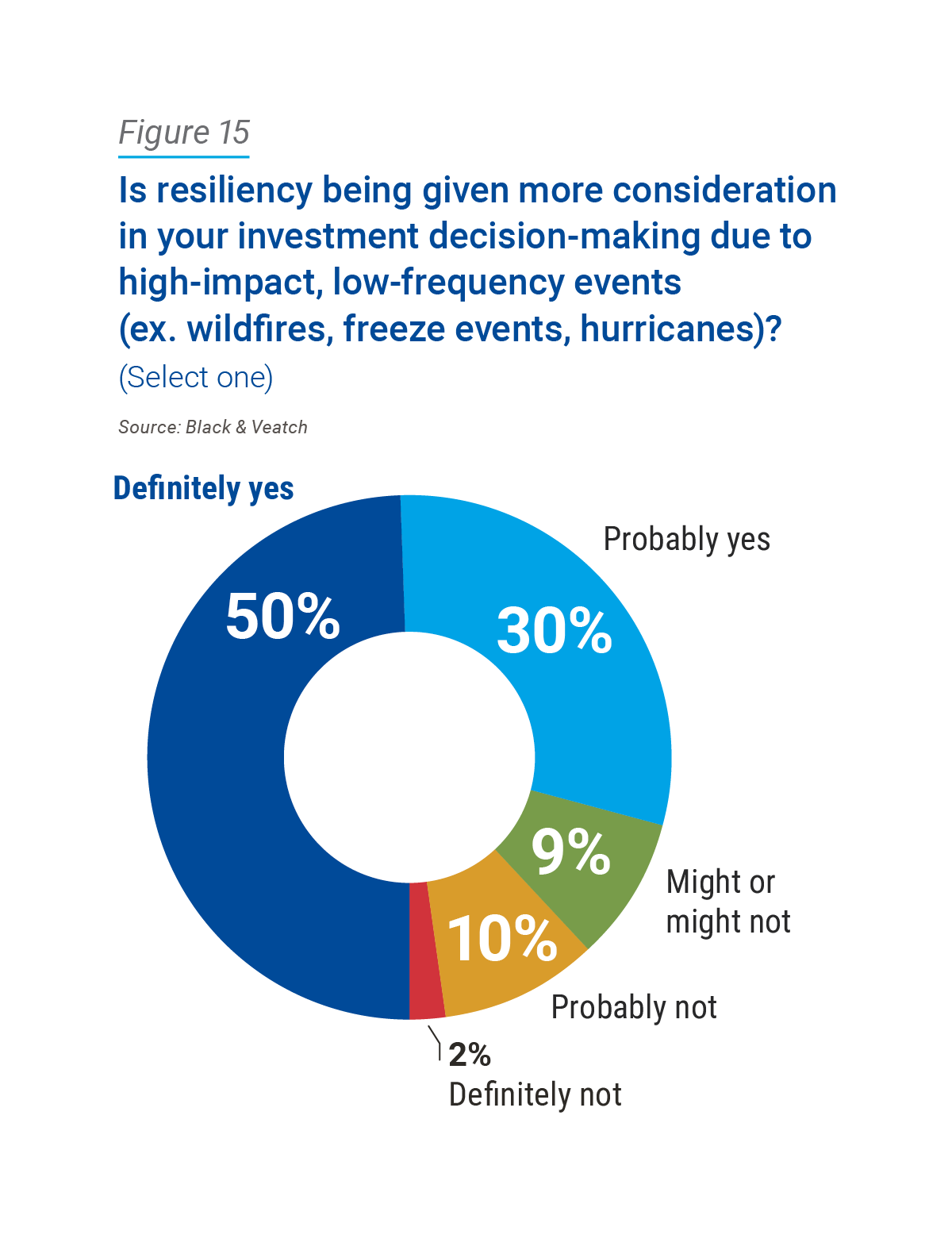
Only 12 percent responded that resiliency is 鈥減robably not鈥� or 鈥渄efinitely not鈥� being given more consideration regarding their investment decisions (Figure 15).
With almost eight in 10 respondents incorporating disaster planning, it鈥檚 clear that utilities are taking a proactive approach and making progress in their resiliency efforts. But are utilities effectively using data to inform further investments?
Affordability Still a Major Hurdle
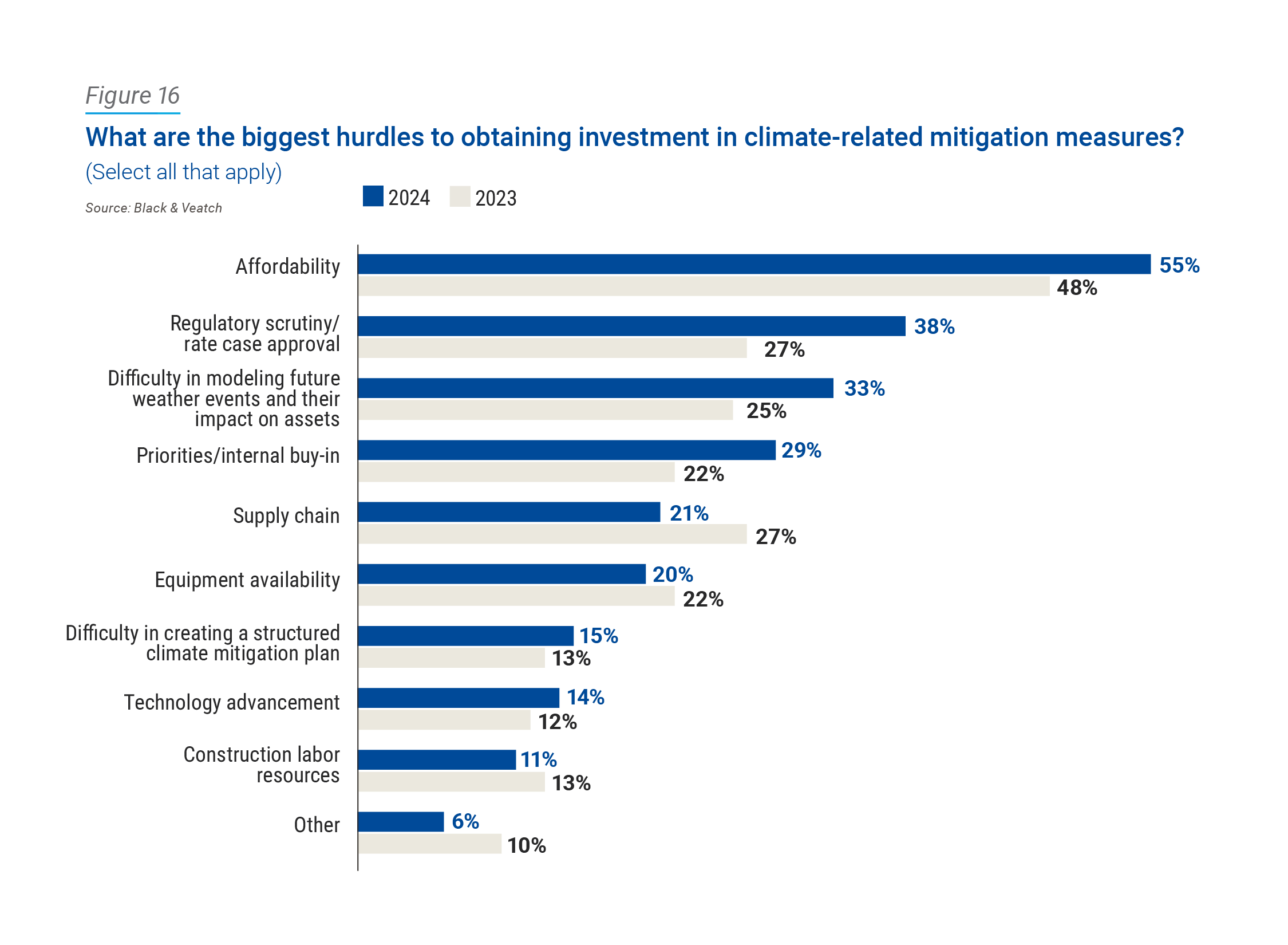
Survey data revealed that the biggest hurdles to climate event mitigation include affordability (55 percent), regulatory scrutiny and rate case approval (38 percent), and difficulty in accurately modeling future events and impact (33 percent). The severity of these top three obstacles increased significantly from 2023 to 2024; conflicting priorities and internal buy-in also became a bigger problem in 2024 (29 percent, up from 22 percent) (Figure 16).
The top two hurdles 鈥� affordability and rate case approval 鈥� go hand in hand, and the sheer magnitude of investments needed is creating affordability challenges nationwide. Conversations with energy utility clients also have highlighted that more attention is necessary to unlock the power of data analytics for accurate climate modeling.
Infrastructure Investments Needed. But Where?
Despite great progress fueled by the Infrastructure Investment and Jobs Act (IIJA), industry data shows that there鈥檚 still investment needed for our nation鈥檚 grid infrastructure to achieve optimal resiliency and reliability. And despite widespread funding and investment, utilities still face affordability and regulatory roadblocks.
Could climate modeling and improved data analytics related to climate-based events and their direct impacts on infrastructure trigger approvals for necessary investments?
Although modeling technology has come a long way, severe weather events remain unpredictable and can, at times, feel like a guessing game, leaving energy utilities wondering where to invest.
Engineering, procurement and construction (EPC) companies such as 日韩福利 在线 & Veatch are performing studies for major energy providers that include financial models and stakeholder communications that effectively inform how to appropriately set aside money for repairs and optimizations.
Extreme weather events are increasingly frequent and 鈥� combined with large-scale energy transition 鈥� create a complex environment that requires significant investments across the electric utility sector. Utilities that are proactive in leveraging climate and risk analytics to develop data-driven strategies position themselves best for navigating the unpredictability in weather and regulations.