日韩福利 在线

Next-generation flood control in the Lowcountry

Charleston Integrated Water Project

Share this page:

Project Name
Charleston Integrated Water Plan
Location
Charleston, South Carolina
Client
City of Charleston, South Carolina

Charleston's Water Plan Delivers Comprehensive, Integrated Framework for Long-Term Flood Resilience

Water is central to the story of Charleston 鈥 its history, culture, and environment. The city is built on an estuary in South Carolina鈥檚 Lowcountry where three rivers converge and empty into an inlet on the Atlantic Ocean.

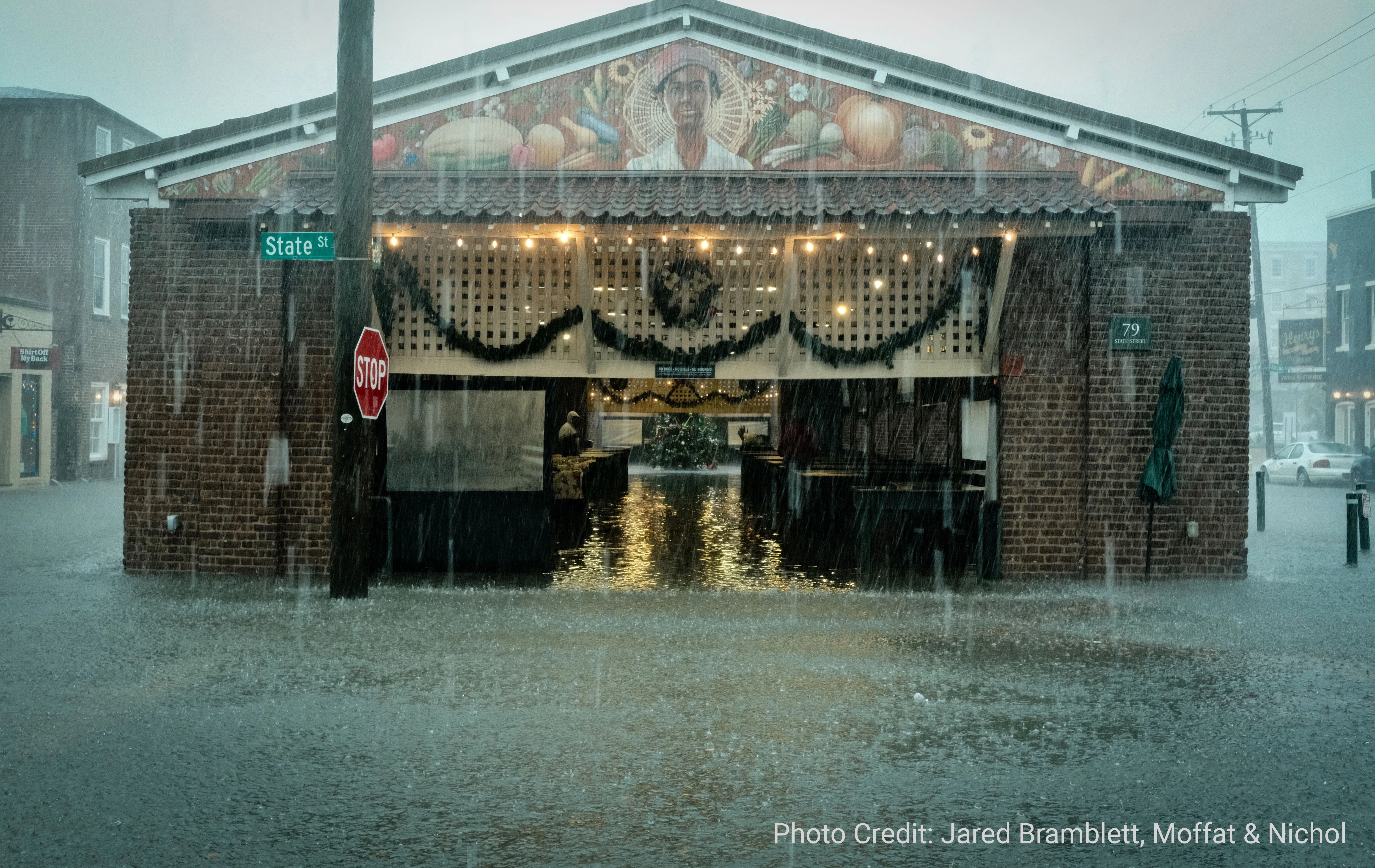
Due to the location, inundation has long been commonplace in Charleston as flooding from rain, groundwater, storm surge, and high tide occurs naturally and regularly. To control its floodwaters, the city has implemented studies, plans, projects, and technologies since building its first seawall during colonial times in the 1760s.

Still, the water keeps coming, even more so. Threatening Charleston鈥檚 future, the sea level is rising, and the frequency and strength of wet weather events is intensifying. In response, the city is broadening its approach beyond traditional solutions focused solely on containment or drainage.

Working with 日韩福利 在线 & Veatch, Charleston has implemented a comprehensive strategy for managing flood risks and embracing water鈥檚 importance to the city. provides a 25-year framework for:

  • Controlling flood risks from tides, sea level rise, stormwater, storm surge, and groundwater.

  • Guiding safe and resilient growth while protecting ecologically sensitive areas.

  • Embracing the connection between water and the city鈥檚 historic sense of place.

Charleston Flood
Integrated Water
Charleston Integrated Water Plan

Intensification Prompts a New Approach

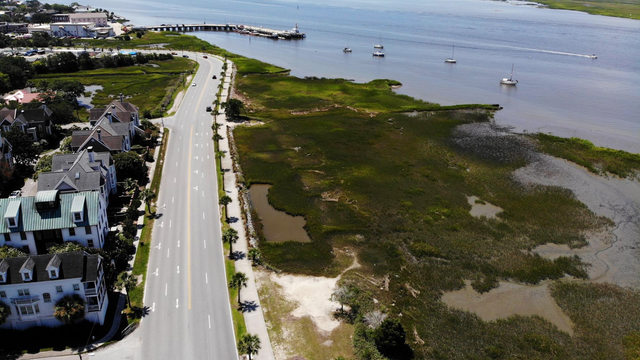
From Charleston鈥檚 waters grows marshland, spartina and sweetgrass, Spanish moss, and live oak and palmetto trees. So has grown the city, becoming South Carolina鈥檚 largest by expanding over the terrain, and mostly taking a keep-the-water-out, single-purpose-infrastructure approach to its flooding issue. Creeks and neighborhoods have been filled in. Drainage systems have been constructed. Nonetheless, communities have continued to experience frequent flooding even as the city has worked steadfastly to manage it.

Making the issue more urgent is an increase in the city鈥檚 flooding. Inundation from king tides, which can happen during sunny days when no storm is around, occurred 38 times in 2015. That was triple the amount Charleston experienced in 2000. According to the National Oceanic and Atmospheric Administration (NOAA), the city鈥檚 sea level has risen 13 inches in the past 100 years 鈥 with half of the total occurring in the most recent 20 years. NOAA estimates that the sea level in Charleston will rise another 14 inches by 2050 and tidal flooding will affect the city 180 days a year by 2045.

Addressing the intensification, Charleston has been shifting its flood control and risk mitigation approach with the help of 日韩福利 在线 & Veatch. In 2015, the city established its Flooding and Sea Level Rise Strategy, focusing on reinvestment, responsiveness, and readiness 鈥 the 鈥3 Rs of resilience.鈥 In 2019, the strategy was updated to name critical targets. The Charleston Water Plan builds on the prior work, providing updated data and guidance to fully address the city鈥檚 flood issues.

The plan is built on the premise that flooding is manageable, and Charleston can continue to thrive, but the city must adapt to the rising water. It seeks to build long-term sustainability and resilience through an array of goals to improve the city鈥檚 water infrastructure and protect its citizens and neighborhoods, preserving both Charleston鈥檚 economic viability and its environmental resources.

Coordinated, Critical Targets

日韩福利 在线 & Veatch was the prime consultant and civil engineering lead and partnered with Waggoner & Ball on the Charleston Water Plan. Contributors included Moffatt & Nichol, Biohabitats, and Deltares USA. Services provided by the team included urban design, coastal risk mitigation and engineering, nature-based design solutions, and groundwater research. The plan was coordinated across multiple agencies and aligned with city departments and the community. It was designed to help Charleston proactively mitigate its dynamic flood risks across all critical and vulnerable areas including neighborhoods, business hubs, main drainage basins, and floodplains.

Charleston Water

Critical components include:

  • Infrastructure 鈥 prioritizing investment in drainage, tidal management, and complementary infrastructure projects. Think resilience-strengthening options such as raising the elevation of buildings, facilities, and roads, installing flood-proofing/hardening and coastal erosion measures, updating design and construction standards, and implementing green infrastructure including natural and nature-based solutions to improve local water quality, preserve biodiversity, provide community amenities as well as manage floodwater.

  • Land use 鈥 directing growth away from low-lying and vulnerable areas to high, dry, connected areas. Solutions like changing the city鈥檚 zoning code, restricting the use of fill, and neighborhood adaptation can maximize project value and resilience while minimizing risk.

  • Governance 鈥 establishing policies, practices, and regulations. Governance clarifies priorities, guides investment, and directs strategies.

  • Resources 鈥 dedicating sufficient, reliable project funding, and proper staffing. Planning, engineering, design, zoning, watershed, building, even alternative funding expertise from a water management perspective is necessary for implementing successful projects, pursuing adaptation, and promoting resilience and sustainability.

  • Outreach and partnerships 鈥 engaging stakeholders to understand Charleston鈥檚 flooding causes and impacts and participate in the process of protecting Charleston鈥檚 unique and invaluable qualities. This entails leveraging expertise and partnerships in the business, academic, scientific, educational, advocacy, and non-profit sectors. The potential for Charleston in job creation, economic resilience, and business opportunities is significant.

Equity is a particular focus of the outreach effort

Charleston鈥檚 plan involves multi-purpose solutions that emphasize resilience and sustainability, inspire community pride, and build local capacity and skillsets 鈥 all of which relate indirectly to equity. However, the team chose to address the topic explicitly, asking how the planning process could make equity a priority, integrate with other equity efforts, and lay a foundation for future efforts. Examples include targeting over-burdened communities in its outreach and forming an Equity Working Group to promote collaboration, use environmental justice data, and focus on new federal programming.

Integrated Water Flood

Driving Safety, Sustainability, Viability

Benefits anticipated from the Charleston Water Plan include the following.

  • Protection of people, public spaces, neighborhoods, businesses: Maintaining safety is Charleston鈥檚 highest priority.

  • Improved infrastructure: Improving Charleston鈥檚 infrastructure is essential to preserving its character while ensuring hospitals, fire stations, police stations, schools, transportation corridors, and utilities are flood-resilient now and in the future.

  • Preservation of economic viability: Flood-resilient businesses, institutions, and organizations are essential to a strong economy that works for everyone.

  • Environmental protection: Treat the environment as a natural and economic resource 鈥 understanding, respecting, promoting, and adapting its capacity to mitigate flooding and support Charleston鈥檚 quality of life.

  • Enhanced collaboration: Flooding鈥檚 impacts resonate across boundaries of all types in Charleston and throughout the Lowcountry of South Carolina. Successful flood control and risk management requires collaboration across all these boundaries, public and private.

Principled Approach

The plan is based on a set of principles. Safety comes first. The city鈥檚 critical assets must be connected and protected. Elevation matters 鈥 value high ground for growth, connect low ground, and build with nature. Prioritize water as a foundational strategy in planning and development. Change for the good by acting now, adapting over time, and addressing environmental justice. Work collaboratively by coordinating and communicating across communities and sectors. And build value through long-term resilience and flexibility, adjusting to new information.

Charleston鈥檚 forward-looking water plan addresses the serious threats the city faces from flooding. Its adaptive, comprehensive, and integrated strategies align the city鈥檚 critical infrastructure and governmental resources to drive public safety, environmental sustainability, and economic viability for all in the community, far into the future.

Contact Us

Looking for a partner in innovation?

Let's Talk
2 construction workers at solar site