As the federal government investigates multiple cyberattacks, it鈥檚 becoming abundantly clear that water utilities are a particularly vulnerable part of the nation鈥檚 critical infrastructure.
Last November, , politically motivated hackers breached a Pennsylvania water utility鈥檚 booster station. While that attack was diverted before any major impacts were made on water quality or availability, U.S. lawmakers have demanded more proactive cybersecurity measures. Last year, the Environmental Protection Agency (EPA) unveiled (and later rescinded) new federal mandates requiring water system inspections to include assessments of cybersecurity threats. While emerging standards are a step forward, there are worries about whether basic observance would give water utilities a false sense of security; compliance often does not necessarily equal a robust cybersecurity program.
Based on expert analyses of data from nearly 630 survey respondents, 日韩福利 在线 & Veatch鈥檚 2024 Water Report illustrates a water sector navigating the challenges of cybersecurity, confidence in their current cybersecurity strategies, proactivity in financing upgrades and willingness to seek expert guidance.
Download the Report
Utilities Acknowledge that Cybersecurity is Essential
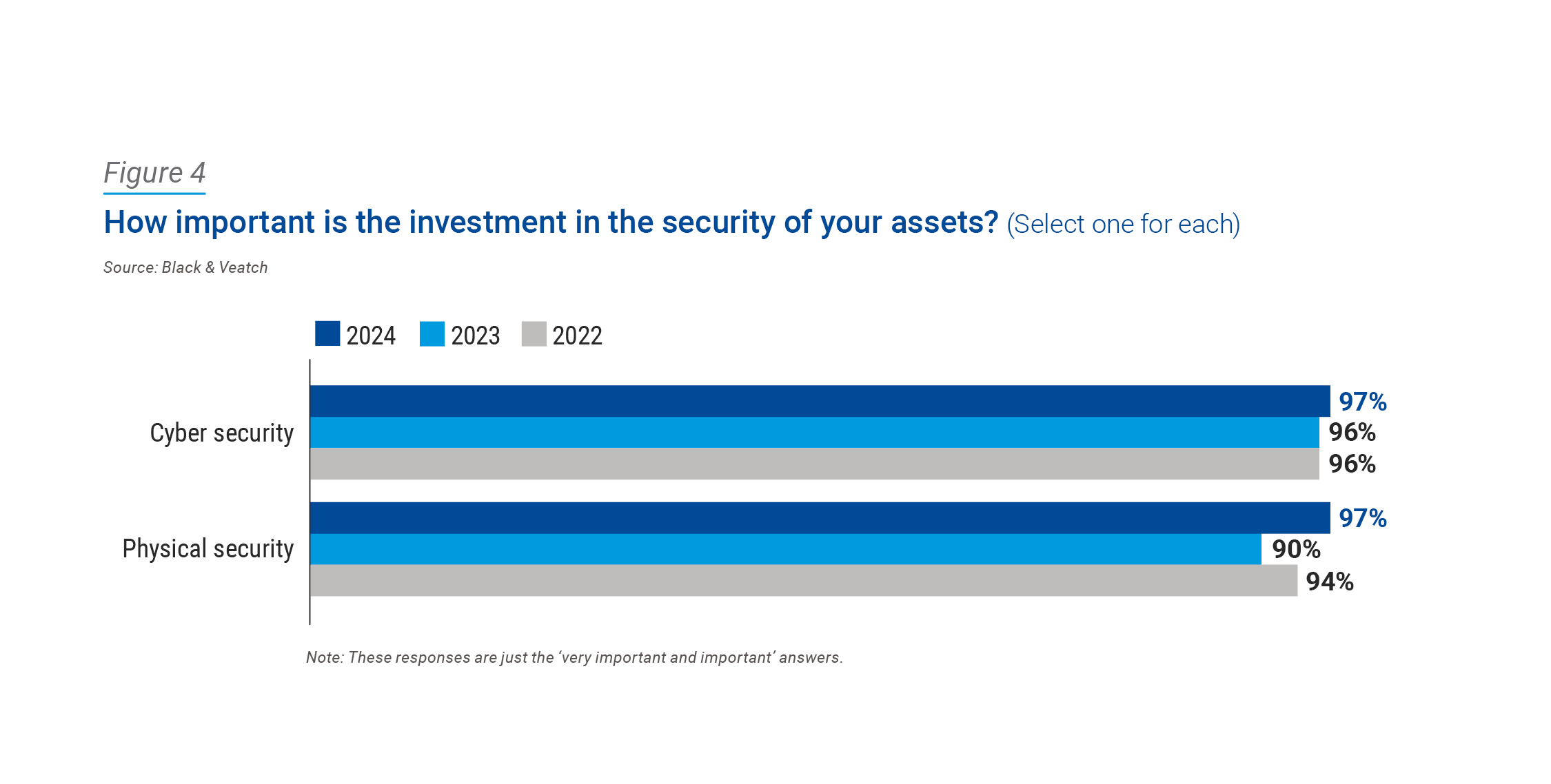
Eighty-six percent of respondents reported that cybersecurity is 鈥渧ery important,鈥� while 73 percent categorized physical security in that way. Utilities are recognizing that cyberthreats have an exponentially growing reach, with even greater potential compromise than physical threats. For example, if a whole network system is compromised in a cyberattack, it could impact the entire utility; if just a single pump station is physically vandalized, the effects might be limited and addressed without a widespread service outage.